
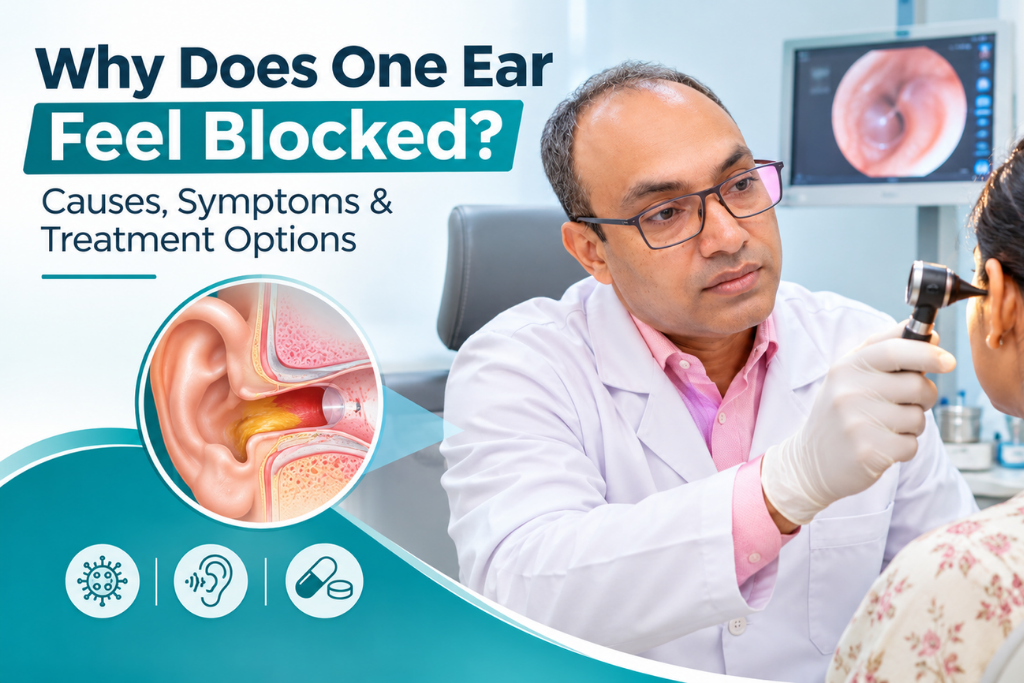
You know that feeling when one ear is plugged even when there is nothing blocking it? Ears that are blocked can make life uncomfortable. You may have muffled hearing, pressure in the ear, popping sounds or trouble hearing conversations clearly. Sometimes the feeling is gone after a few hours, sometimes it stays for days.
Why does one ear seem blocked? There are a number of reasons for this, including build-up of earwax, fluid behind the eardrum, allergies, sinus infections and changes in air pressure. While many causes are transient, chronic ear obstruction should not be disregarded, particularly if it is affecting your hearing.
The first step to identifying the correct treatment is to know what’s causing the blockage.
How Does a Blocked Ear Feel?
A blocked ear doesn’t always mean something is lodged in the ear canal. It can also be caused by pressure fluctuations or issues with the middle or inner ear.
Those with obstruction in the ear typically complain of a feeling of fullness. Like hearing things underwater. Some people notice the sounds are quieter in one ear, and some people have popping, crackling or minor discomfort.
Depending on the underlying reason, the symptoms may affect one or both ears.
Typical Reasons for One Ear Feeling Blocked
Earwax Build-Up
Earwax buildup is one of the most frequent reasons for a clogged ear. Earwax generally protects the ear canal by collecting dust and other particles. If it builds up and becomes impacted, however, it might obstruct the ear canal partially or entirely. You may have impaired hearing, a feeling of fullness in the ear, itching or discomfort. Don’t put cotton buds or other things into the ear since they can push wax further in.
Dysfunction of the Eustachian Tube
The Eustachian tube connects the middle ear to the back of the nose and serves to equalize pressure. If it fails to work properly, pressure might build up in the middle ear. This issue is known as Eustachian tube dysfunction, and it can cause a feeling of fullness, popping and trouble hearing well. Common causes include allergies, colds, and sinus infections.
Sinus Infection and Allergies
Nasal congestion isn’t just a breathing problem. Inflammation in the nose and throat might disturb the normal operation of the Eustachian tube. Pressure in the ears, facial discomfort, nasal congestion and temporary hearing abnormalities might be symptoms of sinus infections or allergies.
Ear Fluid
Fluid can sometimes build up in the middle ear without a normal ear infection. This condition is called otitis media with effusion (OME). It may cause a sense of fullness and impaired hearing. The eardrum can be checked by an ENT, and fluid can be confirmed or ruled out.
Variation in Air Pressure
Do you know that feeling when you are on a plane or traveling over the mountains and your ears get blocked? The middle ear pressure can be affected by rapid changes in the air pressure. In simple circumstances, swallowing, yawning or chewing can help level the pressure.
When to Worry About a Blocked Ear
An occasional obstructed feeling may not be a significant issue. But certain symptoms require medical care. If you suffer from recurrent ear obstruction, recurring bouts, ear pain, discharge, ringing sounds or continuous hearing problems, consult an ENT professional.
Sudden hearing loss requires urgent medical assessment (preferably immediately and within 24 hours). Do not assume that unexpected hearing alterations are only earwax or congestion.
How is an Ear Blockage Diagnosed?
The ENT doctor will usually start by asking you about your symptoms, medical history and how long the blockage has been there. An otoscope exam lets the doctor see into the ear canal and eardrum for wax buildup, inflammation, infection or other abnormalities.
Additional testing, depending on symptoms, may be:
- Pure Tone Audiometry: This test is done to see how well you hear different sound frequencies.
- Tympanometry: Measures mobility of the eardrum and pressure in the middle ear.
- Nasal Exam: Identifies nasal congestion or disorders affecting the Eustachian tube.
These evaluations are useful to find the root cause of the problem rather than only addressing the feeling of constipation.
What are the Treatment Options for a Blocked Ear?
Treatment depends on real reason. If ear wax is the cause of the problem, an ENT professional may propose proper ear wax removal. If you have allergies or swelling in your nose, your doctor may prescribe the necessary prescription.
Fluid behind the eardrum may need to be watched and further evaluated. Some cases improve naturally, whereas chronic cases may need further treatment. If the obstruction is pressure related, treatments to help equalize middle ear pressure may be prescribed when appropriate.
Avoid ear candles, putting things in your ear, or just using random ear drops without medical advice.
Can I Prevent Ear Blockage?
Not all causes can be prevented, but there are a few basic behaviours that can help protect your ears. Do not put cotton buds into the ear canal, treat allergies appropriately, seek therapy for recurrent nasal and sinus problems, and wear suitable ear protection in noisy areas.
If you find yourself repeatedly blocked, don’t keep considering it as a minor nuisance. Knowing what is causing it will help prevent more discomfort and hearing difficulties.
Conclusion
There are several reasons for a blocked ear, ranging from simple ear wax build up to issues with the middle ear or Eustachian tube. Some cases resolve without much treatment, but persistent symptoms warrant comprehensive evaluation.
An expert ENT Specialist can detect the underlying problem and propose a suitable treatment strategy to safeguard your hearing and ear health.
Consult Dr. Nayeem Ahmad Siddiqui
If you are experiencing difficulty hearing, ringing in your ears, or other ear-related symptoms, consult Dr. Nayeem Ahmad Siddiqui, Senior Consultant ENT.
Early diagnosis can help identify the cause of hearing difficulties and guide appropriate treatment. Do not ignore persistent symptoms. Book an ENT consultation to discuss your concerns and understand the available treatment options.
Also Read: Hearing Problems: Symptoms, Causes, and When to See an ENT Specialist
Frequently Asked Questions
1. Why Does One Ear Become Blocked?
Unilateral ear blockage can be caused by earwax buildup, fluid below the eardrum, Eustachian tube malfunction, infection or other ear problems. Examination will reveal the cause.
2. Will a Plugged Ear Clear by Itself?
Yes. Some cases resolve spontaneously due to transitory pressure shifts or minor congestion. But if hearing changes are chronic or sudden, they should be checked out by a doctor.
3. Does a Plugged Ear Mean Hearing Loss?
It might be. The blocked feeling may be accompanied with temporary or permanent impairments in hearing, depending on the underlying disease.
4. Ear Blockage and Sinus Problems: Is There Any Relation?
Yes. Inflammation of the nose and sinuses can impact the Eustachian tube, leading to pressure changes and a feeling of blockage.
5. When Should I See an ENT Doctor?
If the obstruction persists, develops again or is associated with pain, discharge or hearing issues you should see an ENT expert. Sudden hearing loss needs quick examination.
Pingback: Snoring in Adults: Common Causes, Health Risks & Available Treatments - drnayeemahmad