
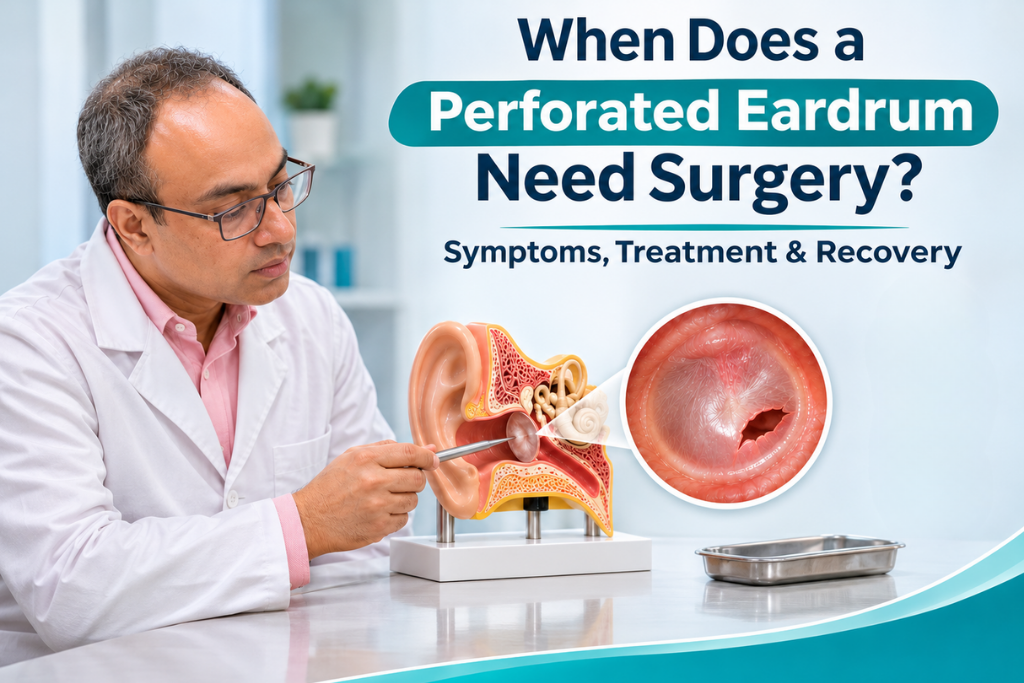
An earache followed by a rapid change in hearing or fluid leaking from the ear can be a cause for concern. One cause could be a perforated eardrum, which is a hole in the thin membrane separating the outer ear from the middle ear.
The eardrum is vital for hearing. It vibrates when sound waves hit it. It helps to pass these vibrations to the tiny bones inside the middle ear. If the membrane is injured, hearing may be impaired and the ear may be more susceptible to infections.
Some tiny perforations heal themselves; others may require medical treatment or surgery. Knowing the source, size and location of the perforation assists in deciding the correct approach.
What is Perforated Eardrum?
A perforated eardrum, also known as a ruptured eardrum, is an opening in the tympanic membrane.
The damage may be minor or severe and may occur in one or both ears. Some people have modest symptoms, others have pain, discharge or significant hearing loss. The syndrome may develop gradually from repeated middle-ear infections or come suddenly after an injury.
Common Reasons for a Torn Eardrum
1. Ear Infections
An infection in the middle ear can cause fluid and pressure to build up behind the eardrum. Occasionally, the pressure will cause the membrane to tear, and fluid or pus will pour from the ear. The rupture may bring pain relief, but the infection still needs to be properly assessed.
2. Damage to the Ear
Accidental damage to the eardrum can occur if cotton buds, hair pins or other things are pushed too far down the ear canal. You can potentially have an ear injury through an accident or acute physical stress. Don’t put anything in the ear canal, even if you think your ear needs cleaning.
3. Sudden Change of Pressure
Sometimes the eardrum is damaged by rapid changes in air pressure. This is called barotrauma. You can experience this when you fly, go scuba diving or are in other circumstances when the pressure fluctuates a lot.
4. Loud, Explosive Sounds
Very loud sounds, like explosions or blasts occurring close to a person, can cause pressure waves that are strong enough to rupture the eardrum. This kind of injury can potentially impair other sections of the hearing system.
What are the Symptoms of a Ruptured Eardrum?
Symptoms may vary based on the source and extent of the perforation. Typical perforated eardrum symptoms include:
- Sudden or progressive hearing loss.
- Pain or discomfort in the ear.
- Fluid, pus or blood draining from the ear.
- Tinnitus (ringing or buzzing in the ears).
- A sense of fullness in the ear.
- Dizziness, in some circumstances.
Not everyone has all these symptoms. Some minor perforations may be very slightly uncomfortable. Seek medical help immediately if you have sudden hearing loss, severe dizziness or a serious ear injury.
Can a Perforated Eardrum Heal Without Surgery?
Yes. Many small holes in the eardrum heal by themselves within a few weeks. It is crucial to keep the ear dry at this time and to avoid further harm. If there is an infection, your doctor may probably recommend therapy as well. But larger perforations or holes that stay open for a long period might not mend up on their own. A chronic perforation may raise the risk of recurrent ear infections and ongoing hearing problems.
When is Surgery Required for a Perforated Eardrum?
If the hole does not close on its own or continues to create issues, eardrum surgery may be recommended. Consider surgery if an ENT specialist in New Delhi finds:
- The hole remains open despite an acceptable monitoring period.
- Recurrent ear infections.
- Perforation associated with hearing loss.
- The structures of the middle ear need to be evaluated or repaired further.
- The perforation is unlikely to close without an operation.
The decision is based on the patient’s hearing, the health of the ear, the status of infection, and the size and location of the perforation.
Tympanoplasty: An Operation to Repair a Perforated Eardrum
Tympanoplasty is an operation to fix a broken eardrum. The surgeon closes the incision using a graft, usually from the patient’s own tissue. The treatment is done under anesthesia. The surgeon may go via the ear canal or make an incision behind the ear to access the eardrum, depending on the condition.
In some circumstances, the bones of the middle ear may also need to be repaired.
The main goals are to close the perforation, limit the risk of recurring infections, and, if feasible, to improve hearing. Hearing may or may not improve. It is contingent upon the condition of the middle ear and other structures that are involved in hearing.
What to Expect During Tympanoplasty Recovery
The outcome depends on the surgical approach and the general condition of the patient’s ear. In the beginning of recovery, you may have some discomfort, transient fullness sensation or impaired hearing. Packing inside the ear may potentially temporarily compromise hearing. Your surgeon will give you advice on ear care, medicines and follow-up appointments.
Patients are usually instructed to:
- Keep the ear that was operated on dry.
- Do not swim until your surgeon gives you the go ahead.
- Do not blow the nose vigorously.
- Do not insert anything into the ear.
- Follow your medical treatment.
- Attend follow-up examinations.
Do not take a flight or go diving until your surgeon says it is okay. It can take several weeks or more to complete healing and hearing evaluation.
How Can You Protect Your Eardrum?
You can help safeguard your hearing by preventing ear injuries and infections. Do not put cotton buds or sharp items in the ear canal. If you have ear pain or discharge that lasts a long time, see a doctor. Do not expose your ears to very loud sounds. If you already have a perforated eardrum, take extra care to keep water out of the affected ear.
Conclusion
A ruptured eardrum can damage hearing and raise the risk for recurrent ear infections. Most of the little holes heal by themselves. Holes that don’t heal may need to be surgically repaired. An ENT specialist can look at the eardrum, check hearing and suggest if observation, medication treatment or tympanoplasty surgery is necessary.
Consult Dr. Nayeem Ahmad Siddiqui
If you are experiencing ear pain, sudden hearing loss, fluid discharge from the ear, or other ear–related symptoms, consult Dr. Nayeem Ahmad Siddiqui, Senior Consultant ENT.
Early diagnosis can help identify the cause and severity of an eardrum perforation and determine whether it may heal naturally or require medical treatment or surgery. Do not ignore persistent ear discharge or changes in hearing. Book an ENT consultation to discuss your symptoms and understand the available treatment options, including tympanoplasty when required.
FAQs
1. Does a Perforated Eardrum Hurt?
It can produce abrupt ear pain, particularly when the perforation occurs from an accident or infection. Sometimes pain goes away when the eardrum ruptures.
2. How Long Does a Ruptured Eardrum Last?
Most tiny perforations may heal within a few weeks, but larger or more intricate perforations may take longer, or need surgery.
3. Will a Punctured Eardrum Cause Permanent Hearing Loss?
It can cause hearing loss, but the degree varies. Some hearing loss improves after the eardrum heals or is fixed. Damage to the inner ear or the bones of the middle ear can influence the result.
4. How Is Myringoplasty Different from Tympanoplasty?
Myringoplasty usually refers to restoration of the eardrum only. Tympanoplasty may comprise eardrum repair and restoration of middle ear structures, if needed.
5. Is the Operation for Tympanoplasty Safe?
Tympanoplasty is a well-known surgical surgery but like other operations, it has possible hazards that include infection, graft failure, persistent perforation, hearing abnormalities and dizziness. Your surgeon can provide you the dangers of this procedure based on your unique circumstances.