
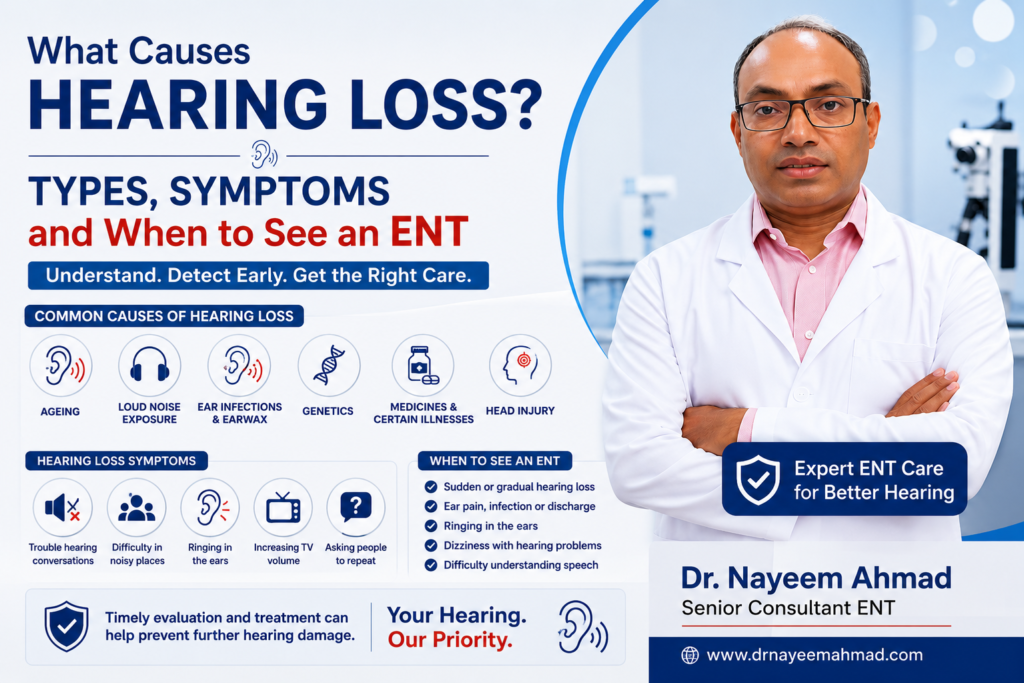
Hearing helps us communicate, stay aware of our surroundings, and enjoy everyday life. When you notice that sounds seem unclear, people need to repeat themselves, or you often increase the volume of the TV, it may be a sign of hearing loss. Hearing changes can happen gradually or may develop suddenly, depending on the cause.
Understanding the causes of hearing loss, its symptoms, and available treatment options can help you seek medical advice at the right time.
What Are the Main Types of Hearing Loss?
Hearing loss is generally divided into three main types:
Conductive hearing loss happens when sound cannot travel properly through the outer or middle ear. Earwax buildup, ear infections, fluid in the ear, or problems with the eardrum can cause this type.
Sensorineural hearing loss affects the inner ear or the hearing nerve. Age-related changes, long-term exposure to loud sounds, certain illnesses, and some medicines may contribute to it.
Mixed hearing loss is a combination of conductive and sensorineural hearing loss.
What Are the Common Causes of Hearing Loss?
There are many possible causes. Common ones include ageing, repeated exposure to loud music or workplace noise, ear infections, excessive earwax, injuries, problems with the eardrum, and certain medical conditions.
Hearing loss can also occur in children due to infections, genetic factors, or problems that affect hearing development. This is why early assessment is important when a child does not respond normally to sounds or has difficulty following conversations.
What Are the Symptoms of Hearing Loss?
Some common hearing loss symptoms include:
- Asking people to repeat themselves frequently
- Difficulty understanding speech in noisy places
- Increasing the TV or phone volume
- Feeling that people are mumbling
- Trouble hearing on the telephone
- Ringing or buzzing in the ears
- Difficulty following conversations
If these symptoms continue or become worse, an ENT evaluation can help identify the possible cause.
How Is Hearing Loss Treated?
The right hearing loss treatment depends on the underlying problem. Simple causes such as earwax blockage or some ear infections may be treated with appropriate medical care. Other cases may require hearing tests, medicines, hearing devices, or specialist procedures.
In some patients, Ear Surgery may be considered when there is a structural problem involving the ear, eardrum, middle ear, or other parts of the hearing system. Treatment should always be based on a proper examination and hearing assessment.
When Should You See an ENT?
You should consider seeing an ENT if hearing loss is persistent, getting worse, affects one ear, occurs with ear discharge or pain, or develops suddenly. Sudden hearing loss should be assessed urgently because early medical evaluation may be important.
If you are looking for an ENT doctor in Delhi NCR, a specialist can examine your ears, review your symptoms, and recommend the appropriate hearing tests and treatment.
Dr Nayeem Ahamad, Senior Consultant ENT, provides evaluation and treatment for a range of ear, nose, and throat conditions. A timely consultation can help identify hearing problems early and guide you toward suitable care.
Frequently Asked Questions
Can earwax cause hearing loss?
Yes. Excessive earwax can block the ear canal and temporarily reduce hearing. It should be removed safely by a healthcare professional when necessary.
Is hearing loss always permanent?
No. Some types are temporary and may improve after treating the underlying cause. Others may be long-term and require ongoing management.
Can loud noise damage hearing?
Yes. Repeated or prolonged exposure to loud sounds can damage sensitive structures in the inner ear and may lead to permanent hearing changes.
When should I see an ENT for hearing loss?
See an ENT if hearing problems persist, worsen, affect one ear, or occur with pain, discharge, dizziness, or ringing. Sudden hearing loss needs prompt medical attention.
Can hearing loss be treated without surgery?
In many cases, yes. Treatment depends on the cause and may include medical care, hearing devices, or other non-surgical options. Surgery is considered only when appropriate for the underlying condition.
Pingback: Hearing Problems: Symptoms, Causes, and When to See an ENT Specialist - drnayeemahmad